Run your med spa from the EMR, or from Claude or ChatGPT.
NEON is a complete medical EMR and CRM, built new on modern technology to replace the outdated systems most spas are stuck with. Work in it like any EMR, or connect the Claude or ChatGPT account you already pay for and do the same work just by asking. Same patient record, same limits for every role, and nothing reaches a patient without a person saying yes.
Run the spa from wherever you are
When you’re not at the front desk, open Claude or ChatGPT on your phone and ask. NEON does the work in the same record your team uses at the clinic.


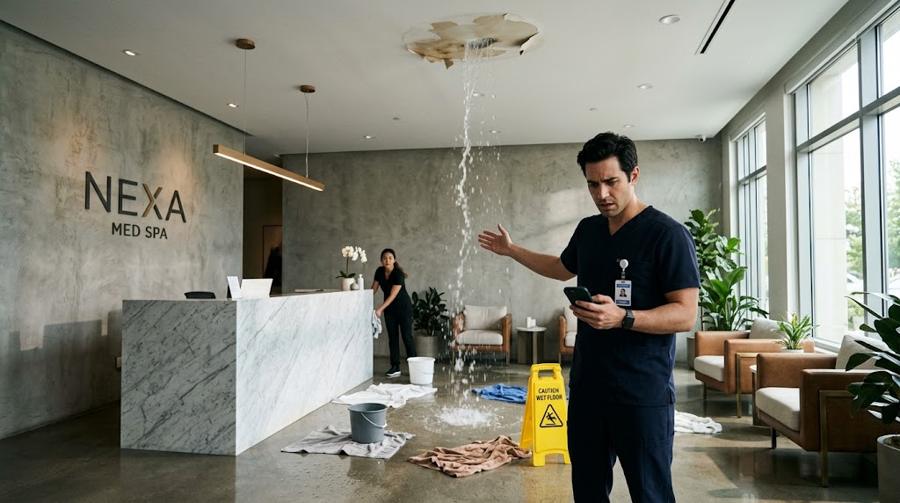
Run the whole EMR from a chat window, not just ask it questions.
Other platforms rent you their own assistant. NEON lets your team’s own Claude or ChatGPT do 146 different things in your EMR: book and move appointments, draft chart notes, send consent forms, receive stock and close out the day, all by asking.
look things up and run reports: availability, unsigned notes, revenue, stock, leads and more
things that make changes when a staff member asks: bookings, notes, sales, stock, tasks
things only a person can do, like signing charts, prescribing and refunds. The AI is blocked from them.
Counts for an owner, October 2026. Front desk staff and providers get fewer, matched to what their job allows. Anything that reaches a patient, money or the chart waits for a person.
See every EMR action →One system instead of five disconnected platforms
Most med spas piece together an EMR, booking software, a payment system, a CRM, a photo app, and a stack of spreadsheets. NEON replaces that patchwork with one connected platform built specifically for aesthetics and wellness practices.
Ask a question, get an answer
NEON can connect your clinic’s information to the ChatGPT or Claude account your team already uses. Instead of searching through multiple screens, authorized employees can ask ordinary questions like:
“Does Dr. Ana have any openings this week?”
“What’s our current Sculptra package price?”
“Which patients haven’t completed their intake forms?”
“Show me the leads who haven’t gotten a follow-up.”
NEON finds the answer based on that employee’s permissions — your front desk, providers, and owners don’t all see the same things. Nobody gets more access than their job already allows.
Everything runs through three parts
The second and third both work the same way: through the same Claude or ChatGPT window your team already has open — not a separate app to learn.
Run Your Clinic
EMR + CRM + Aesthetics Ops
EMR, scheduling, payments, charting, consent, and patient management — one record, from first inquiry to loyal client.
Explore the platformMake Adjustments Without Logging In
EMR AI Assistant
Schedule or cancel appointments, review chart notes, assign tasks and more — just by asking in the Claude or ChatGPT window your team already uses. An owner can ask it to do 146 different things, and each person only gets what their job allows.
See how it worksSee Your Whole Business
Shared IQ
Marketing, revenue, inventory, equipment, and operations, unified into one place — and you can ask about all of it from the same Claude or ChatGPT account.
Go deeperFour things NEON does every day
Run the clinic
Scheduling, patient records, payments, memberships, consent forms, charting, and communication, from one system.
Improve the patient experience
Keep each patient’s history, treatment plan, photos, and follow-up organized from first inquiry through long-term care.
Help your team be more efficient
Let authorized employees find information and complete routine tasks without searching through multiple systems.
Understand your business
Bring marketing, leads, revenue, equipment, inventory, staff activity, and SOPs together in one view.
Built specifically for aesthetics and wellness
NEON is designed for the workflows general medical software and salon software often overlook.
Med Spas
Injectables, lasers, devices, and provider-led care, with the clinical rigor a medical director expects.
IndustryAesthetic Spas
Consultations, treatment plans, facials, skincare, and recurring patient relationships.
IndustryWellness Practices
Medical weight loss, hormone therapy, lab review, and ongoing patient monitoring.
IndustryMen’s Clinics
Low T, sexual wellness, and peptide therapy, with dosing and labs tracked in one record.

“I didn’t need an outdated EMR and five AI bots trying to run my business. I needed one system my team could run from the AI we already use.”
Chris Castello, MSN, APRN, FNP-C spent years in critical care before becoming a nurse practitioner and co-owner of multiple med spas. After the daily frustration of disconnected software, repetitive documentation, missed follow-up, and limited reporting, he helped create the system he wished his own clinics had — built around the way med spas actually operate, not the way a generic software company assumes they do.
Meet the teamFewer systems. Less busywork. More visibility.
Fewer systems
Replace disconnected software, spreadsheets, and manual work with one platform.
Less time spent charting
Visit-specific templates and organized patient information make documentation faster.
Easier follow-up
Every lead and patient is tracked, so opportunities don’t disappear after an inquiry.
Better visibility
See appointments, revenue, leads, memberships, and inventory in one place.
Smarter use of AI
Your team gets faster answers, while a provider stays responsible for every clinical decision.
Built by an operator
Designed by someone who has run the front desk, not a vendor guessing at your day.
Now NEON can fill the calendar it already manages
Website, local listings, Google & AI search, and advertising — run by NEON and measured against the same bookings and revenue already tracked in your EMR, not a separate agency’s spreadsheet.
Website & local presence
A hosted website, AI chat, directory listings, and Google Business Profile & Yelp optimization.
Reputation & content
Review management, Google Maps ranking, and blog articles shared as Google posts.
Search & ads
Google & AI search with monthly audits, anonymous visitor ID and remarketing, plus paid ads on Google, Bing, Meta, TikTok, and direct mail.
See how NEON compares
Honest, side-by-side comparisons against the platforms med spas consider most often — where NEON matches up, and where it doesn’t.
Frequently asked questions
What is NEON?
How does NEON use AI?
Does AI make clinical decisions or automatically complete charts?
Do I need to purchase a separate AI assistant?
Is NEON designed for HIPAA-regulated practices?
Can I migrate from my current software?
How much does NEON cost?
See what NEON could replace in your clinic
Schedule a 30-minute walkthrough based on your current systems, staff, and workflows. No generic presentation — we’ll show you how NEON would work inside a clinic like yours.
NEON EMR + Aesthetics Ops
One record, from first inquiry to loyal client. Built new on modern technology, not old software patched together over the past decade — and designed by an NP who treats aesthetics and wellness patients, for providers.
Built new, by a provider
Many clinic systems started as salon software or as decade-old programs with new features stacked on top. NEON started from a blank page, so everything works together the way your day actually runs.
Not patched together
The schedule, chart, payments and marketing were built as one system and share one patient record, so there’s no second login to find what you need.
Ready for AI from day one
NEON was built to work with Claude and ChatGPT from the start, with limits for every role. It isn’t an assistant bolted onto old software.
Designed by a provider, for providers
Chris Castello, an NP who treats aesthetics and wellness patients, designed NEON around what a provider needs between rooms, not what a software company guessed.
Meet the teamEverything the market leader covers — and then some
It’s the same ground the market leader covers — clinical charting, consent, injectables, before/afters, membership, and POS, all in one system built for full spa coverage. We just don’t stop there.
Four features worth a closer look
Every clinical-tier EMR claims charting and consent. Here’s where NEON’s version is built to hold up — in a lot recall, an audit, or a diligence review.
| Date | Product | Units | Lot | Provider |
|---|---|---|---|---|
| Apr 14 | Botox | 20 u | C3521 | A. Ruiz, NP |
| Apr 14 | Botox | 12 u | C3521 | A. Ruiz, NP |
| Jan 22 | Juvéderm Voluma | 1 syr | VB20L4 | A. Ruiz, NP |
| Nov 3 | Xeomin | 24 u | X88104 | J. Park, PA |
Injectable tracking, down to the lot number
Every syringe ties back to a unit count, a lot number, and the provider who administered it. If a lot is ever recalled, you already know exactly which patients received it — not a name search away.
- Units and lot number captured at the point of injection
- Tied to the administering provider automatically
- Searchable by lot across every patient, instantly
Before/after photos that do the selling for you
Standardized angles and consistent framing, filed straight to the chart with side-by-side comparison — ready to show a patient their own progress, or to use in marketing with consent already on file.
- Guided capture keeps angle and lighting consistent visit to visit
- Side-by-side comparison, no separate photo app
- Marketing use gated by the same consent record
Consent that’s actually signed before the needle
Procedure-specific consent forms, signed digitally and stored permanently with the chart — not a paper form in a drawer, and not a generic waiver that doesn’t match the treatment performed.
- A distinct form for each injectable, laser, or device treatment
- Signed on a tablet at intake, filed to the chart automatically
- Retrievable instantly if a patient or a regulator ever asks
Charting with a real amendment trail
Once a note is signed, it’s signed. Any later change creates a separate, visible amendment — so a chart is defensible at audit, in a dispute, or in front of a buyer’s diligence team, without anyone wondering what got quietly edited.
- Signed notes are locked; corrections are addenda, not overwrites
- Full amendment history stays attached to the original note
- Every edit is timestamped and attributed to a specific user
See the full record in action
Bring your busiest week. We’ll show you exactly where it gets faster.
EMR AI Assistant
Forget logging in for every little task. NEON connects the Claude Team or ChatGPT Business accounts your staff already use directly to your EMR — so the questions and jobs that used to mean opening the software now happen in the chat window they already live in.
Your EMR goes where your day goes
Providers don’t live at a desk. Open Claude or ChatGPT on your phone and ask, the same way you’d text a colleague.
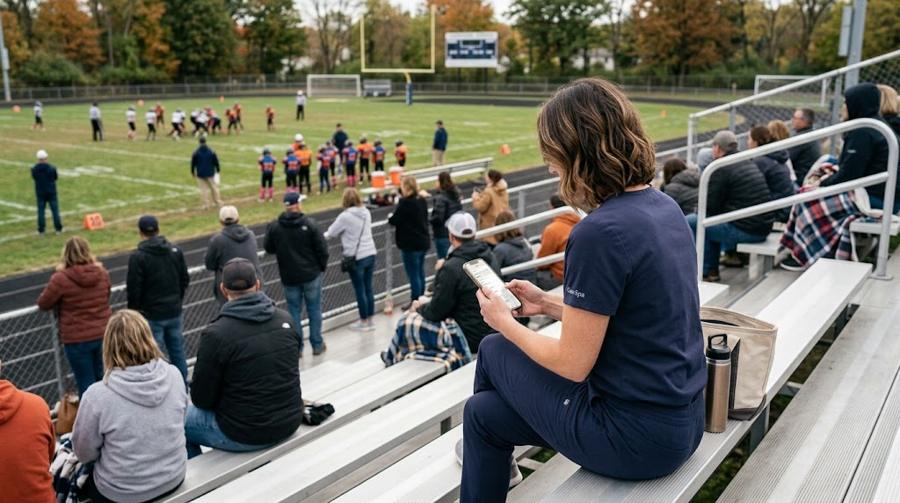
Access is limited to each person’s role, not handed out for convenience. Your front desk can look up pricing and open slots. A provider can pull a chart or drop a note. A manager can move a schedule or approve time off. Nobody’s model gets more than that person’s job already allows — it just gets to act on it. Refunds, prescriptions and chart signatures stay with a person, whatever the role.
Front desk
Check pricing & packages
See open availability
Look up a patient’s next visit
Provider
Pull a patient’s history
Add a chart note
Review injectable history
Manager
Book or move appointments
Approve time off
Run revenue reports
Ask it what your role allows
Setup takes one call
We add NEON to your clinic’s Claude or ChatGPT account and set what each job role can see and do. Your staff sign in once, then just ask. No software to install.
Pin what matters, right where you work
EMR AI Assistant isn’t only for questions typed one at a time. Pin a live view inside Claude or ChatGPT, and it updates as your day does — no separate dashboard to open.
This is the same look-up-only front desk role from above — the dashboard can only surface what that person is already allowed to see. A manager’s pinned view could show pending time-off requests and payroll flags instead; a provider’s could show today’s unsigned notes. The permission model is the same one, just rendered instead of typed.
What the AI can do, and what it never will
Each number is a task your team can ask for. Anything that changes a record only happens when a staff member asks and says yes. Some tasks are blocked for everyone.
things an owner can ask it to do in Claude or ChatGPT
look things up or run reports, without changing anything
make changes, like booking or drafting a note, when staff ask
things the AI is blocked from doing, for everyone
When staff ask, the AI can
Look up clients, open slots, unsigned notes, revenue and stock
Book, reschedule and set up a weekly course of treatments
Draft patient replies and stage campaigns for review
Start a draft chart note and place face-map markers
Receive inventory and record cash or check payments
Only a person can
Sign or co-sign a chart note
Write, amend or refill a prescription
Refund, void, tip or surcharge a sale
Publish a consent form or approve a note template
Commit a data import, or change AI and payment settings
Counts for an owner, October 2026. Front desk staff and providers get fewer, matched to what their job allows. Another 179 tasks stay switched off until we’ve checked them.
Works alongside QuickBooks
Connect QuickBooks to the same Claude or ChatGPT account, and an owner can check the schedule in NEON and the books in QuickBooks in one conversation. QuickBooks access follows each person’s QuickBooks login, so connect it only for staff who should see the books. How it works with Shared IQ
Watch your own AI account run the EMR
Bring the Claude or ChatGPT account you already pay for. We’ll connect it live.
Shared IQ
Your EMR is one slice of what it takes to run a medspa. The rest lives scattered — a marketing dashboard here, a folder of vendor contacts there, a drawer of leases, a filing cabinet of device manuals, an SOP taped up in the treatment room. Shared IQ pulls all of it into one layer, and you can ask about it from the same Claude or ChatGPT window your team already uses for EMR AI Assistant.
NEON EMR
Patients, schedule, charts, revenue — already unified in Product 01.
Every channel
Website analytics, Google Ads, Meta, Groupon — spend and results in one place.
Who to call
Vendor contacts for HVAC, plumbing, cleaning, and your landlord.
The paperwork
EIN, articles of organization, employment agreements, leases, banking.
What’s on the floor
Spec sheets and manuals for every treatment machine you own.
Your SOPs
Neurotoxin SOP, Dermal Filler SOP, QuantumRF SOP — whatever you’ve written down.
Add QuickBooks to the same AI account
Connect QuickBooks to the Claude or ChatGPT account your team uses for NEON, using Intuit’s own QuickBooks connector in Claude or app in ChatGPT. Then one question can cover the books and the business: “Revenue in NEON was up last month. Did our supply costs in QuickBooks go up with it?” We’ll walk you through connecting it during setup.
QuickBooks access follows each person’s QuickBooks login, not NEON’s roles, so connect it only for staff who should see the books.
NEON’s guidance layer
Underneath all of it sits something we wrote, not you: our own instructions to the AI on how to consume this collection — what to trust first, what needs a human before it’s acted on, and how a medspa actually runs day to day. It’s the difference between an AI that can see your data and one that knows what your data means.
Ask across the whole business, not one system
Pin a different view for every role
Same live layer, three different lenses — the office manager sees the floor, the provider sees their patients, the owner sees the business the way a buyer eventually will.
The owner’s view isn’t a vanity dashboard — it’s the same numbers a buyer’s diligence team would ask for: growth, margin, recurring revenue, and retention. Every figure on every view traces back to a real source, the same permission model as EMR AI Assistant — what shows up depends on the person asking.
The number you need, in seconds
The landlord’s service line, the snow plow, the water delivery. Shared IQ knows your leases and vendor list, so anyone on your team can ask ChatGPT on their phone and get the right number before the problem gets worse.


Vendor names, phone numbers, warranty details and marketing figures are examples.
Bring your whole business into one view
We’ll map your own data sources onto Shared IQ live.
Find out if your numbers are actually good.
Med Spa 9 is a peer network for established med spa, aesthetics, wellness and men’s-clinic owners. Each Group is built around nine owners who compare standardized, benchmarked numbers every quarter — and NEON’s Shared IQ is what makes those numbers comparable.


Co-founded by Chris Castello and Hillary Mitchell, nurse practitioners who run med spa, wellness and men’s-clinic brands today.
Real numbers, not war stories
Every vendor has a reason to tell you you’re doing great. A room of like-sized owners comparing the same metrics doesn’t.
Contribute
Each member reports standardized operating data — revenue, utilization, retention and more.
Normalize
Shared IQ maps every member’s numbers onto one definition, whatever EMR they run.
Benchmark
The Group sees real comparisons every quarter, then meets to work out what’s behind them.
Two cohorts, built around where you are
The Graduation Cohort
Established single-location owners nearing, or opening, location #2. Delegation, systemizing and first-time multi-unit problems.
The Scaling Cohort
Independent operators already running 2–10 locations. Ops at volume, hiring and retention at scale, and sharper use of benchmarks.
Groups are for owners whose primary location does at least $1M a year, so the comparisons are useful for everyone in the room. Newer owners get an honest read on what to focus on first instead of a seat that doesn’t fit yet.
Every Group runs on Shared IQ
Members connect Shared IQ to their own ChatGPT Business or Claude Team account. Their numbers are normalized and compared across the Group, with no shared third-party login and no need to switch EMRs.
What stays private
- Your raw numbers stay inside your GroupNothing leaves it without your consent.
- Comparisons, not exposureBenchmarks are aggregated and anonymized where appropriate.
- Any EMRYou don’t need to run NEON to join a Group.
Four reasons, one room
Share and learn
Learn from operators already solving the problem you’re facing now.
Trusted bonds
Real relationships with like-sized owners, not internet strangers.
Speed your growth
Skip years of trial and error your peers have already paid for.
Uncover savings
Group buying power across pharmacies, devices and services.
Built by operators who still run the businesses
Med Spa 9 isn’t coach-led or vendor-run. Its co-founders are practicing nurse practitioners who own and operate the kinds of clinics in the room.
Chris Castello, MSN, APRN, FNP-C
A board-certified family nurse practitioner with a critical-care background in the ICU and PCU at Indiana University Health.
Day-one operator, Genesis Lifestyle Medicine · Carmel, IN
Operator, Fort Madison Med Spa, plus locations nationally
Hillary Mitchell, FNP, PMHNP
A psychiatric and family nurse practitioner whose clinical background spans critical, primary and behavioral care.
Owner, New You Weight and Wellness
“Sponsors are vetted for member value and never influence group discussion.”
NEON supports the technology layer that every Group runs on. Chris also co-founded NEON; Med Spa 9 is its own company, and NEON is its technology partner.
Group 1 is filling now
Founding-rate pricing is locked in for the first cohort only. Applications and founder consults happen on the Med Spa 9 site.
Fill the calendar the same system already tracks.
Your website, local listings, SEO, and ad accounts — run by NEON and reported against the same bookings and revenue already sitting in your EMR, not a separate agency guessing at what worked.
Everything it takes to get found, and stay found
Each service works on its own or as part of a package, and each has its own page below. Nothing here requires a second login, a second contract, or a second vendor to manage.
Start where it hurts most, add on as it works
Illustrative starting points — every service is also available on its own.
Look credible everywhere
Website & hosting, AI chat, and directory listing management.
Win the searches nearby
Foundation, plus Google Business Profile & Yelp optimization, review management, Google Maps ranking, and blog articles shared as Google posts.
Every channel, one report
Local Growth, plus monthly Google & AI search audits, visitor ID & remarketing, and advertising across streaming TV, search, social, and direct mail.
Packages above are illustrative. Book a demo and we’ll price it against your locations, current spend, and goals.
Frequently asked questions
Do I need to already use NEON’s EMR?
How is this different from hiring a marketing agency?
Who actually does the work?
Is my patient data ever used for advertising or website tracking?
How does review management use my patient data, then?
Can I start with just one service, like the website?
See what this could do for your calendar
Bring your current site, your Google Business Profile, and last month’s ad spend. We’ll show you exactly where it’s leaking, live.
Visibility before vanity.
Most spa websites are built to look good in a portfolio. NEON builds yours to be found — by patients, by Google, and increasingly, by the AI engines patients now ask instead of searching.
A site engineered to rank, not just to render
Design still matters — your site should look like your spa. But a beautiful site that search engines can’t parse, or that loads too slowly to hold a patient’s attention, isn’t doing its job.
A migration checklist, followed every time
Moving platforms is where most sites lose rankings — not because the new site is worse, but because nobody protected what the old one had already earned. NEON runs the same checklist on every migration.
| Page | Labels added | Check |
|---|---|---|
| Home | Medical business, location, hours | Valid |
| Botox | Treatment, price | Valid |
| Morpheus8 | Treatment, price | Valid |
| FAQ | Questions and answers | Valid |
| Reviews | Reviews, star rating | Valid |
The right behind-the-scenes labels, on every page
Google and AI search tools don’t read a page the way a person does — they read hidden labels in the code that say what the page is about. NEON adds the right labels to each page, not one generic template copied everywhere.
- Labels that mark you as a local medical business, on location and about pages
- Labels for each treatment and its price, on every treatment page
- Labels for your FAQs and reviews, so they can show up in search results
Built to pass Google’s page-speed test, not explain why it doesn’t
A slow site loses rankings before it loses patience — Google measures load speed, responsiveness, and visual stability directly, and ranks accordingly. NEON’s platform is built lightweight from the start, instead of a page builder with plugins bolted on.
- Fast loading (LCP), quick response to taps (INP), and a layout that doesn’t jump around (CLS)
- Images and scripts optimized automatically, not left to chance
- No page-builder bloat competing with your content for load time
Hosted the way a medical business is expected to be hosted
Your website is part of a medical practice, not a side project, and NEON hosts it accordingly. Redundancy and backups aren’t an upgrade tier here — they’re the default, the same way they are across the rest of NEON.
- Backup servers, so one problem doesn’t take your site offline
- Regular automated backups, so a bad update or an attack is never a full loss
- The same compliance posture as the rest of NEON — see the Trust Center for details
See your current site’s vitals, live
We’ll run your existing website through the same checks Google uses, while you watch.
The chat that already knows your calendar.
NEON’s website chat isn’t a bolted-on add-on from a different vendor — it runs on the same availability, pricing, and intake as the rest of your EMR. Already have a chatbot you like? You can keep it.
The same AI that answers your team now answers your visitors
It’s the same assistant your front desk already uses, just facing outward. There’s no separate system to keep updated, and no lag between what’s true in your EMR and what your chat tells a patient.
- Answers pricing, availability, and service questions instantly
- Hands off to a staff member the moment a conversation needs one
- Every conversation lands in the same lead record as a call or walk-in
Already using a different chatbot? Bring it.
You’re not required to run NEON’s chat to use the rest of Marketing & Ads. Plenty of third-party chat add-ons are heavy enough to hurt your Google page-speed score without anyone noticing until rankings slip. NEON will test your current chatbot against the same checks Google uses and tell you plainly whether it passes or fails — and what to change if it doesn’t.
Not sure if your current chat is helping or hurting?
We’ll run it through a live page-speed check during your demo.
One name, one address, one phone number — everywhere.
Your NAP (name, address, phone) shows up in dozens of places you don’t control directly: directories, maps, review sites, and your own website. NEON locks it down and keeps it that way.
NEON is your NAP gatekeeper
Once your name, address, and phone number are locked, NEON monitors your website, your directory listings, and your Google Business Profile for drift — and corrects it before it becomes a problem, not after.
Usually 50 to 150 listings, not one or two
A real local citation network for a med spa is wide. NEON manages it in three tiers.
Major aggregators & maps
Google Maps, Apple Maps, and Bing Places — the core sources most other apps and directories pull their data from.
General directories
Yelp, Yellow Pages, Facebook, and the other broad, high-traffic listing sites most consumers already check.
Healthcare & aesthetics niches
Healthgrades, RealSelf, and roughly 40 more specialized medical and wellness directories patients use specifically to vet a provider.
Inconsistency reads as a red flag to all three
Search bots
Conflicting listings are a trust signal in the wrong direction — Google treats inconsistent NAP data as a reason to rank you lower, not just a cosmetic issue.
AI bots
AI answer engines pull from the same directory data to decide who to recommend. An outdated address can quietly remove you from a recommendation entirely.
Consumers
A wrong number gets a busy signal instead of a booking. A wrong address gets a no-show at your old suite. Both cost you the appointment.
See where your listings already disagree
We’ll pull your current directory footprint and show you every place your NAP doesn’t match.
Two platforms, one reputation.
Google Business Profile gets most of the attention. Yelp quietly influences more than owners realize — including how some AI engines describe your reputation. NEON optimizes both.
Neither profile runs on autopilot
Kept current, every week
Categories and services matched to what you actually offer, photos refreshed regularly, Q&A monitored, and posts published on a schedule — not set up once and left alone.
Optimized, not ignored
Business information, categories, and photos kept accurate and current, with review activity monitored the same way as Google — because Yelp isn’t optional just because it isn’t where most leads come from.
Why Yelp matters even if you don’t get leads from it
Some AI engines are now surfacing Yelp ratings in their answers instead of, or alongside, Google stars — and Google itself factors Yelp performance into how you rank in search results. A neglected Yelp profile can quietly cost you visibility on platforms you never think to check.
See how your two profiles compare today
We’ll pull both up side by side and show you exactly what’s outdated.
Reviews, handled before they become a problem.
Requests go out automatically after a visit, every platform gets watched, and nothing negative sits unanswered for long.
Our standard: a response within 24 hours
Whether or not NEON is managing your reviews, we believe every review earns a response within 24 hours — the same discipline we apply to posting fresh photos regularly and keeping your Google Business Profile active. Silence reads as neglect to both patients and search engines.
See your current review response time
We’ll show you how long your last ten reviews sat before anyone replied.
The three listings everyone taps first.
When someone searches “med spa near me,” the top three Google Maps listings shows up before any organic result — and most people never scroll past it. NEON optimizes specifically for that placement.
Radius targeting, tuned to how patients actually search
NEON optimizes your Google Maps ranking for both a tight 5-mile radius and a wider 10-mile pull, so you show up whether someone’s searching from three blocks away or driving in from the next suburb over.
- 5-mile radius optimization for your immediate neighborhood
- 10-mile radius optimization for patients willing to travel
- Tuned to your competition and goals, not a fixed default
Special offer: automatic 1-star review challenges, included with Google Maps ranking
With Google Maps ranking in place, 1-star Google reviews are automatically challenged by NEON’s AI. The service is built to challenge 1-star reviews that violate Google’s Terms — not every 1-star review does, so a genuine complaint about a real visit won’t be removed just because NEON contests it. NEON doesn’t guarantee a challenge succeeds, but the attempt itself is automated every time, with nobody having to remember to file it.
Local search doesn’t reward second place
Most local searches end at the top three Google Maps listings. If you’re not one of the three listings shown, the patient books with whoever is — regardless of who’s actually the better fit.
See where you currently rank on Google Maps
We’ll check your position from both a 5-mile and a 10-mile search.
Quality over quantity.
Articles written to actually inform shoppers, Google, and AI engines — not an AI content mill publishing volume for its own sake.
Written to be useful, first
Every article answers a real question a patient is actually asking — recovery timelines, how a treatment feels, what it costs, how it compares to an alternative. No spray-and-pray AI filler chasing keyword volume.
Every article becomes a Google Business post, too
When NEON manages your Google Business Profile, each new article gets mirrored there as a post. It’s less about patients discovering articles on your Google Business Profile and more about giving Google a consistent, ongoing signal that your business is active.
- New content published to your site and posted to your Google Business Profile together
- Part of the same activity signal as regular photo posts and fast review responses
- Consistency, not a single burst of content that goes quiet for months
See what your last Google Business Profile activity looked like
We’ll show you how long it’s been since your profile last showed Google any signs of life.
SEO that gets checked every month, not launched and left.
NEON refuses to set it and forget it. We watch performance, report monthly, and make adjustments the same month an issue shows up.
An actual audit, not a status email
Want to move faster?
For clinics looking to outpace competitors quickly rather than compound gradually, NEON offers custom, more aggressive strategies — heavier content velocity, technical overhauls, and expanded audit scope. Ask about it when you book a demo.
See what a real audit of your site finds
We’ll run the same checks live and walk through what shows up.
Find out who visited, then give them a reason to book.
NEON identifies up to 90% of your anonymous U.S. website visitors and follows up right away with a custom-designed email campaign and an offer they didn’t see on your site. Then our business development team calls to book the appointment for you.
From anonymous visit to booked appointment
Four steps, started the day they visit
Enough to write an offer that fits the person
Each identified visitor comes with contact details, what they looked at on your site, and household and demographic data, so the offer and the call match who they are.
- Contact: name, email, phone and mailing address
- Visit: the pages they viewed on your website
- Demographics: age, gender, marital status and occupation
- Household: homeowner or renter
- Financial ranges: income, net worth and modeled credit tier
Fully separate from patient records. No clinical data from your EMR is used.
Reach them on more channels
Available at an additional cost, on top of standard pricing.
Priced by your website traffic
Pricing is based on your monthly website traffic volume. Bring your analytics to the demo and we’ll quote from your real numbers. Currently available in the U.S. only.
Your suppression lists come first
During onboarding, you give NEON your email opt-outs and do-not-contact lists, and we suppress them before any campaign starts. Calls respect the Do Not Call registry, SMS is consent-based, and every email includes an unsubscribe link. All state laws and requirements are followed.
Visitor ID questions
How many of my visitors will you identify?
What’s included in standard pricing?
How is the price set?
Do you call people on the Do Not Call registry?
Is it available outside the U.S.?
Does it use my patients’ records?
See how many of your visitors we could identify
Bring your website traffic numbers and we’ll show you the estimate and the price.
The only ad report that ends at a booked appointment, not a click.
Streaming TV, Google, Bing, Meta, TikTok, and direct mail, managed from one team — and tracked against the same calendar and payment ledger already inside NEON.
Every channel that matters, one account
Streaming TV
Google & Bing
Meta
TikTok
Plus direct mail, for the patients who still respond best to something in their actual mailbox.
Reported back to revenue, not just clicks
Every dollar spent is tracked against the same calendar and payment ledger already inside NEON — nobody has to build a spreadsheet to find out if a campaign actually filled Thursday’s injectable block.
- Shared IQ traces each ad back to real bookings and revenue
- Ask which channel drove the most booked revenue last month, and get a straight answer
- Works alongside Visitor ID & remarketing to win back visitors who didn’t book the first time
From acquisition to management, one team
NEON stays with you from the first ad that brings a patient in, through every visit after — ready to go on the journey with your spa.
NEON for Med Spas
Injectables, lasers, and provider-led procedures need a system that treats compliance and clinical rigor as the default, not an add-on. NEON was built by a practicing NP running exactly this kind of clinic.
EMR + Aesthetics Ops, tuned for injectables and devices
Injectable tracking that holds up
Units, lot numbers, and the administering provider, tied to every syringe — ready if a lot ever gets recalled.
Medical director oversight
Credentialing rules mean only the right license shows up as bookable for neurotoxin, filler, or laser.
Consent that matches the procedure
Injectable, laser, and device-specific consent forms, signed before the needle and filed to the chart.
EMR AI Assistant, for a clinic with real clinical stakes
Your front desk can answer “do we have a Botox opening Thursday” without touching a patient’s chart. A provider can pull injectable history before a touch-up. A medical director can review every note signed this week — all from the AI account your clinic already has.
“Do we have anything open with Dr. Ana this week, and what’s the current Sculptra package price?”
Shared IQ, for a business built around devices and protocol
Your Neurotoxin SOP, Dermal Filler SOP, and QuantumRF SOP live next to your actual device manuals — so a question about a specific machine or protocol gets answered from the source, not a provider’s memory.
Run your med spa on one system
Bring your busiest injectable day. We’ll show you where it gets faster.
NEON for Aesthetic Spas
Skin health, facials, and a broader wellness menu still need real documentation and a business that runs on time — without feeling like a hospital. NEON keeps the clinical rigor in the background and the client experience up front.
EMR + Aesthetics Ops, tuned for a broader treatment menu
Consultation-first booking
New clients start with a real skin consultation path, not a generic appointment slot.
Before/after that sells itself
Standardized photo capture makes a facial series or peel program easy to show, not just tell.
Membership & retail on one till
Recurring facial plans, retail skincare, and packages, without a second point-of-sale system.
EMR AI Assistant, for a lean front-of-house team
Most aesthetic spas run lean at the front desk. EMR AI Assistant means a staff member can ask “what’s our next opening for a HydraFacial” or “move my 2pm to 3” from the same chat they already use — without a second piece of software to learn.
“Move Thursday’s 9am with Jake to Friday, same time — and text him the change.”
Shared IQ, for a business that runs on repeat clients
Marketing spend, membership performance, and vendor contacts for the equipment your estheticians rely on every day — in one place your AI can answer questions about, instead of three different tabs.
Run your spa on one system
Bring your busiest Saturday. We’ll show you where it gets faster.
NEON for Wellness Practices
Medical weight loss, hormone therapy, and ongoing wellness programs run on relationships that last months, not one visit. NEON keeps the labs, the plan, and the follow-up in one place instead of scattered across portals.
EMR + Aesthetics Ops, tuned for ongoing care
Plans that span months, not visits
Weight-loss and hormone-therapy plans stay attached to the same record as every check-in and lab review.
Lab review, in the chart
Bloodwork and lab results file directly to the patient record, next to the treatment plan they’re informing.
Membership built for recurring care
Monthly programs, refills, and check-ins run on the same membership and billing engine as the rest of the clinic.
EMR AI Assistant, for a team tracking patients over time
Your front desk can answer “when is her next injection due” without opening the chart. A provider can pull a patient’s last three lab panels before a visit. All from the same AI account your team already uses.
“Which patients are due for a weight-loss check-in this week, and who hasn’t had labs run in 90 days?”
Shared IQ, for a program built on follow-through
Marketing spend, membership retention, and your written protocols for hormone therapy or weight-loss monitoring, in one place your AI can answer questions about — so nothing falls through between visits.
Run your wellness program on one system
Bring your toughest follow-up list. We’ll show you where it gets easier.
NEON for Men’s Clinics
Low T, sexual wellness, and peptide therapy run on lab work, dosing schedules, and follow-up that can’t slip. NEON keeps the labs, the protocol, and the refill cycle in one record instead of scattered across a pharmacy portal and a spreadsheet.
EMR + Aesthetics Ops, tuned for hormone and peptide protocols
Protocol-specific dosing records
Testosterone, peptide, and sexual wellness dosing tracked per patient, not reconstructed from memory at the next visit.
Lab review built into the chart
Baseline and follow-up labs — total and free testosterone, PSA, hematocrit — filed straight to the record next to the plan they inform.
Refill cycles that don’t get missed
Recurring TRT and peptide programs run on the same membership and refill engine as the rest of the clinic, so a script never quietly lapses.
EMR AI Assistant, for a practice built on monitoring
Your front desk can answer “when is his next injection due” without opening the chart. A provider can pull a patient’s last three testosterone panels before a visit. All from the same AI account your team already uses.
“Who’s due for a Low T follow-up panel this month, and which peptide patients haven’t checked in in 60 days?”
Shared IQ, for a program built on discretion and retention
Marketing spend, membership retention, and your written protocols for TRT dosing, peptide reconstitution, and sexual wellness programs, in one place your AI can answer questions about — so nothing falls through between visits, and every conversation stays as discreet as the service itself.
Run your men’s clinic on one system
Bring your current TRT and peptide patient list. We’ll show you where the follow-up gets easier.
NEON vs Zenoti
Zenoti is a broad, multi-vertical platform (salon, spa, med spa, fitness) built for scale, fronted by an “AI Workforce” led by an AI receptionist named Zeenie. NEON matches its clinical and commercial depth for medical spas specifically, then adds two things Zenoti doesn’t: your own AI account with real permissions, and one layer across your whole business.
Where the two platforms line up
| Capability | NEON | Zenoti |
|---|---|---|
| Core EMR + booking + payments | ✓ | ✓ |
| Aesthetic clinical depth (injectables, consent, before/after) | ✓ | ✓ |
| Named AI assistant, built into the app | by design, no | ✓ Zeenie |
| Your own AI account, with access limited by role | ✓ EMR AI Assistant | — |
| Unified layer across EMR, marketing, facility, admin, devices & SOPs | ✓ Shared IQ | — |
Reflects Zenoti’s own public product marketing as of 2026. “Partial” reflects vendor or third-party sources describing that depth as more limited than a dedicated aesthetic EMR — see the disclaimer below.
Three differences worth knowing
When Zenoti might be the better fit
If you’re running a multi-vertical business — a spa alongside a salon or gym under one roof — Zenoti’s broader category coverage may fit better than a platform built specifically for medical aesthetics.
NEON vs Zenoti: FAQ
Does NEON have the same features as Zenoti?
What is Zenoti’s Zeenie, and does NEON have an equivalent?
Is NEON cheaper than Zenoti?
Can I switch from Zenoti to NEON?
See it for yourself
The best comparison is a live one — bring your workflows and we’ll show you exactly where NEON fits.
NEON vs Podium
Podium began as a messaging and reputation-management platform and has since built out an EMR under the banner of an “AI Operating System,” fronted by an AI Employee named Avery who’s positioned to run the job itself. NEON takes the opposite approach: full clinical depth, plus your own AI account with permissions you control, not an AI employee replacing your team.
Where the two platforms line up
| Capability | NEON | Podium |
|---|---|---|
| Core EMR + booking + payments | ✓ | ✓ |
| Aesthetic clinical depth (injectables, consent, before/after) | ✓ | partial |
| Named AI assistant, built into the app | by design, no | ✓ Avery |
| Your own AI account, with access limited by role | ✓ EMR AI Assistant | — |
| Unified layer across EMR, marketing, facility, admin, devices & SOPs | ✓ Shared IQ | — |
Reflects Podium’s own public product marketing as of 2026. “Partial” reflects vendor or third-party sources describing that depth as more limited than a dedicated aesthetic EMR — see the disclaimer below.
Three differences worth knowing
When Podium might be the better fit
If messaging, reviews, and reputation management across many types of local businesses — not just medical aesthetics — is your top priority, Podium’s broader small-business messaging roots may appeal.
NEON vs Podium: FAQ
What is Podium’s “AI Employee” Avery?
Does Podium have injectable tracking and consent forms like NEON?
Is Podium good for reviews and messaging?
How do I compare NEON and Podium for my practice?
See it for yourself
The best comparison is a live one — bring your workflows and we’ll show you exactly where NEON fits.
NEON vs OptiMantra
OptiMantra is a deep, template-driven EMR built for integrative and functional medicine practices, with strong e-prescribing and customizable charting. It’s comparatively quiet on AI — not by design, but because it hasn’t built an AI layer at all. NEON matches OptiMantra’s charting depth for medical aesthetics, then adds AI with limits you control OptiMantra doesn’t have.
Where the two platforms line up
| Capability | NEON | OptiMantra |
|---|---|---|
| Core EMR + booking + payments | ✓ | ✓ |
| Aesthetic clinical depth (injectables, consent, before/after) | ✓ | ✓ |
| Named AI assistant, built into the app | by design, no | — |
| Your own AI account, with access limited by role | ✓ EMR AI Assistant | — |
| Unified layer across EMR, marketing, facility, admin, devices & SOPs | ✓ Shared IQ | — |
Reflects OptiMantra’s own public product marketing as of 2026. “Partial” reflects vendor or third-party sources describing that depth as more limited than a dedicated aesthetic EMR — see the disclaimer below.
Three differences worth knowing
When OptiMantra might be the better fit
If your practice blends medical aesthetics with broader integrative or functional medicine services — hormone therapy, IV nutrition, wellness — OptiMantra’s template flexibility across specialties may be worth a look.
NEON vs OptiMantra: FAQ
Is OptiMantra good for med spas?
Does OptiMantra have an AI assistant?
Can I e-prescribe with NEON like I can with OptiMantra?
How do I know which platform fits my practice?
See it for yourself
The best comparison is a live one — bring your workflows and we’ll show you exactly where NEON fits.
NEON vs AestheticsPro
AestheticsPro is a HIPAA-compliant EMR built specifically for medical aesthetics, with detailed clinical documentation and a built-in AI suite called Kai. NEON matches its clinical documentation depth, then adds a fundamentally different approach to AI: your own AI account, with access limited by role, instead of a proprietary AI feature.
Where the two platforms line up
| Capability | NEON | AestheticsPro |
|---|---|---|
| Core EMR + booking + payments | ✓ | ✓ |
| Aesthetic clinical depth (injectables, consent, before/after) | ✓ | ✓ |
| Named AI assistant, built into the app | by design, no | ✓ Kai |
| Your own AI account, with access limited by role | ✓ EMR AI Assistant | — |
| Unified layer across EMR, marketing, facility, admin, devices & SOPs | ✓ Shared IQ | — |
Reflects AestheticsPro’s own public product marketing as of 2026. “Partial” reflects vendor or third-party sources describing that depth as more limited than a dedicated aesthetic EMR — see the disclaimer below.
Three differences worth knowing
When AestheticsPro might be the better fit
AestheticsPro has been serving medical aesthetics practices for years with genuinely deep clinical documentation. If Kai’s embedded AI assistant already fits how your team works, switching costs are worth weighing carefully.
NEON vs AestheticsPro: FAQ
What is AestheticsPro’s Kai?
Is AestheticsPro HIPAA compliant?
Does NEON have telemedicine like AestheticsPro?
How do I decide between NEON and AestheticsPro?
See it for yourself
The best comparison is a live one — bring your workflows and we’ll show you exactly where NEON fits.
NEON vs PatientNow
PatientNow is a long-established, aesthetics-focused EMR with strong two-way marketing integration and an AI booking assistant named Recura. NEON matches its clinical-grade charting for medical aesthetics, then adds EMR AI Assistant and Shared IQ — AI with limits you control and a unified business-data layer PatientNow doesn’t offer.
Where the two platforms line up
| Capability | NEON | PatientNow |
|---|---|---|
| Core EMR + booking + payments | ✓ | ✓ |
| Aesthetic clinical depth (injectables, consent, before/after) | ✓ | ✓ |
| Named AI assistant, built into the app | by design, no | ✓ Recura |
| Your own AI account, with access limited by role | ✓ EMR AI Assistant | — |
| Unified layer across EMR, marketing, facility, admin, devices & SOPs | ✓ Shared IQ | — |
Reflects PatientNow’s own public product marketing as of 2026. “Partial” reflects vendor or third-party sources describing that depth as more limited than a dedicated aesthetic EMR — see the disclaimer below.
Three differences worth knowing
When PatientNow might be the better fit
PatientNow has a long track record with surgical and non-surgical aesthetic practices specifically. If Recura’s booking-assistant approach already fits your front desk, that history is worth factoring in.
NEON vs PatientNow: FAQ
What is PatientNow’s Recura?
Does PatientNow support surgical practices?
Is NEON’s photo documentation as strong as PatientNow’s?
How do I compare pricing?
See it for yourself
The best comparison is a live one — bring your workflows and we’ll show you exactly where NEON fits.
NEON vs Aesthetic Record
Aesthetic Record is known for some of the deepest injectable and photo documentation tools in the category — real strengths worth taking seriously. NEON matches that clinical charting depth, and adds booking, payments, marketing, and membership natively in the same system, plus EMR AI Assistant and Shared IQ.
Where the two platforms line up
| Capability | NEON | Aesthetic Record |
|---|---|---|
| Core EMR + booking + payments | ✓ | partial |
| Aesthetic clinical depth (injectables, consent, before/after) | ✓ | ✓ |
| Named AI assistant, built into the app | by design, no | — |
| Your own AI account, with access limited by role | ✓ EMR AI Assistant | — |
| Unified layer across EMR, marketing, facility, admin, devices & SOPs | ✓ Shared IQ | — |
Reflects Aesthetic Record’s own public product marketing as of 2026. “Partial” reflects vendor or third-party sources describing that depth as more limited than a dedicated aesthetic EMR — see the disclaimer below.
Three differences worth knowing
When Aesthetic Record might be the better fit
If injectable and photo documentation depth is your single highest priority and you’re comfortable pairing it with separate scheduling and marketing tools, Aesthetic Record’s specialization is genuinely strong.
NEON vs Aesthetic Record: FAQ
Do I need other software alongside Aesthetic Record?
Is Aesthetic Record’s injectable tracking better than NEON’s?
Does NEON have an AI assistant like Aesthetic Record?
How do I move my charts from Aesthetic Record to NEON?
See it for yourself
The best comparison is a live one — bring your workflows and we’ll show you exactly where NEON fits.
NEON vs Pabau
Pabau is a genuinely comprehensive all-in-one platform — EMR, scheduling, marketing, POS, and stock management, with an injection-plotting feature and an AI notes tool called Pabau Scribe. NEON matches that breadth for medical aesthetics specifically, then adds your own AI, with limits you control and a unified business-data layer.
Where the two platforms line up
| Capability | NEON | Pabau |
|---|---|---|
| Core EMR + booking + payments | ✓ | ✓ |
| Aesthetic clinical depth (injectables, consent, before/after) | ✓ | ✓ |
| Named AI assistant, built into the app | by design, no | ✓ Scribe |
| Your own AI account, with access limited by role | ✓ EMR AI Assistant | — |
| Unified layer across EMR, marketing, facility, admin, devices & SOPs | ✓ Shared IQ | — |
Reflects Pabau’s own public product marketing as of 2026. “Partial” reflects vendor or third-party sources describing that depth as more limited than a dedicated aesthetic EMR — see the disclaimer below.
Three differences worth knowing
When Pabau might be the better fit
Pabau is one of the most complete all-in-one platforms in the category, and Pabau Scribe is a genuinely useful documentation aid. If its broader clinic-and-salon feature set already fits your operation, it’s a serious option.
NEON vs Pabau: FAQ
What does Pabau Scribe do?
Does Pabau have injection tracking?
Is Pabau good for multi-service businesses?
How does NEON’s AI account compare to Pabau Scribe?
See it for yourself
The best comparison is a live one — bring your workflows and we’ll show you exactly where NEON fits.
NEON vs Nextech
Nextech is a deep, established specialty EHR built for plastic surgery, dermatology, and medical aesthetics, with comprehensive documentation and TouchMD photo integration. NEON matches its clinical rigor for medical aesthetics specifically, in a lighter, faster-to-deploy system, plus EMR AI Assistant and Shared IQ.
Where the two platforms line up
| Capability | NEON | Nextech |
|---|---|---|
| Core EMR + booking + payments | ✓ | ✓ |
| Aesthetic clinical depth (injectables, consent, before/after) | ✓ | ✓ |
| Named AI assistant, built into the app | by design, no | — |
| Your own AI account, with access limited by role | ✓ EMR AI Assistant | — |
| Unified layer across EMR, marketing, facility, admin, devices & SOPs | ✓ Shared IQ | — |
Reflects Nextech’s own public product marketing as of 2026. “Partial” reflects vendor or third-party sources describing that depth as more limited than a dedicated aesthetic EMR — see the disclaimer below.
Three differences worth knowing
When Nextech might be the better fit
Nextech has real depth for large surgical and dermatology groups with complex, multi-provider workflows. If you’re a larger enterprise practice already invested in that ecosystem, its specialty-specific maturity is a genuine strength.
NEON vs Nextech: FAQ
Is Nextech good for plastic surgery practices?
Does Nextech have an AI assistant?
Is NEON as established as Nextech?
How does before/after photo documentation compare?
See it for yourself
The best comparison is a live one — bring your workflows and we’ll show you exactly where NEON fits.
NEON vs Boulevard
Boulevard describes itself as a client-experience platform first, with charting added as a newer layer — it explicitly positions itself as an alternative to a “deep medical EMR,” not as one. NEON is built the other way around: full clinical depth from day one, plus the booking polish a modern med spa expects.
Where the two platforms line up
| Capability | NEON | Boulevard |
|---|---|---|
| Core EMR + booking + payments | ✓ | ✓ |
| Aesthetic clinical depth (injectables, consent, before/after) | ✓ | partial |
| Named AI assistant, built into the app | by design, no | — |
| Your own AI account, with access limited by role | ✓ EMR AI Assistant | — |
| Unified layer across EMR, marketing, facility, admin, devices & SOPs | ✓ Shared IQ | — |
Reflects Boulevard’s own public product marketing as of 2026. “Partial” reflects vendor or third-party sources describing that depth as more limited than a dedicated aesthetic EMR — see the disclaimer below.
Three differences worth knowing
When Boulevard might be the better fit
If a polished, consumer-facing booking experience is your top priority and your clinical documentation needs are lighter, Boulevard’s client-experience focus is a genuine strength worth considering.
NEON vs Boulevard: FAQ
Is Boulevard an EMR?
Does Boulevard have injectable and lot tracking?
Is Boulevard good for booking and client experience?
Can I move from Boulevard to NEON?
See it for yourself
The best comparison is a live one — bring your workflows and we’ll show you exactly where NEON fits.
NEON vs Vagaro
Vagaro is a broad salon, spa, and fitness booking platform that has added EMR-style features, including an AI assistant called Vera. NEON is purpose-built for medical aesthetics specifically, with clinical documentation as the foundation rather than an addition to a general beauty-booking tool.
Where the two platforms line up
| Capability | NEON | Vagaro |
|---|---|---|
| Core EMR + booking + payments | ✓ | ✓ |
| Aesthetic clinical depth (injectables, consent, before/after) | ✓ | partial |
| Named AI assistant, built into the app | by design, no | ✓ Vera |
| Your own AI account, with access limited by role | ✓ EMR AI Assistant | — |
| Unified layer across EMR, marketing, facility, admin, devices & SOPs | ✓ Shared IQ | — |
Reflects Vagaro’s own public product marketing as of 2026. “Partial” reflects vendor or third-party sources describing that depth as more limited than a dedicated aesthetic EMR — see the disclaimer below.
Three differences worth knowing
When Vagaro might be the better fit
If you run a broader beauty or wellness business — salon services alongside light aesthetics — Vagaro’s wider category coverage may be the more practical fit.
NEON vs Vagaro: FAQ
What is Vagaro’s Vera?
Does Vagaro have a real EMR?
Is Vagaro good for salons as well as med spas?
How do I compare injectable tracking between Vagaro and NEON?
See it for yourself
The best comparison is a live one — bring your workflows and we’ll show you exactly where NEON fits.
NEON vs Mangomint
Mangomint is a polished salon and spa management platform that describes itself as including EMR functionality. NEON is built specifically for medical aesthetics, with clinical documentation as the foundation rather than a feature added to a general salon platform.
Where the two platforms line up
| Capability | NEON | Mangomint |
|---|---|---|
| Core EMR + booking + payments | ✓ | ✓ |
| Aesthetic clinical depth (injectables, consent, before/after) | ✓ | partial |
| Named AI assistant, built into the app | by design, no | — |
| Your own AI account, with access limited by role | ✓ EMR AI Assistant | — |
| Unified layer across EMR, marketing, facility, admin, devices & SOPs | ✓ Shared IQ | — |
Reflects Mangomint’s own public product marketing as of 2026. “Partial” reflects vendor or third-party sources describing that depth as more limited than a dedicated aesthetic EMR — see the disclaimer below.
Three differences worth knowing
When Mangomint might be the better fit
Mangomint is a genuinely well-designed, modern platform for salons and day spas. If your service mix is mostly non-medical, its polish and ease of use are real advantages.
NEON vs Mangomint: FAQ
Is Mangomint good for medical spas?
Does Mangomint track injectables and lot numbers?
Does Mangomint have an AI assistant?
How do I know if I need a dedicated medical aesthetics EMR?
See it for yourself
The best comparison is a live one — bring your workflows and we’ll show you exactly where NEON fits.
NEON vs GlossGenius
GlossGenius is a beauty and salon booking app that has added charting features, including photo markup and medical-director sign-off. NEON is built specifically for medical aesthetics, with the clinical depth that a broader beauty-booking platform doesn’t start from.
Where the two platforms line up
| Capability | NEON | GlossGenius |
|---|---|---|
| Core EMR + booking + payments | ✓ | ✓ |
| Aesthetic clinical depth (injectables, consent, before/after) | ✓ | partial |
| Named AI assistant, built into the app | by design, no | — |
| Your own AI account, with access limited by role | ✓ EMR AI Assistant | — |
| Unified layer across EMR, marketing, facility, admin, devices & SOPs | ✓ Shared IQ | — |
Reflects GlossGenius’s own public product marketing as of 2026. “Partial” reflects vendor or third-party sources describing that depth as more limited than a dedicated aesthetic EMR — see the disclaimer below.
Three differences worth knowing
When GlossGenius might be the better fit
GlossGenius is a well-regarded, easy-to-use app for independent beauty professionals. If your business is primarily salon services with light aesthetics on the side, its simplicity is a real advantage.
NEON vs GlossGenius: FAQ
Is GlossGenius an EMR?
Can GlossGenius handle injectable and lot tracking?
Is GlossGenius good for solo practitioners?
How does NEON handle medical director sign-off?
See it for yourself
The best comparison is a live one — bring your workflows and we’ll show you exactly where NEON fits.
NEON vs Meevo
Meevo is a salon, spa, and med spa management platform that, by its own description, gives aesthetic practices lighter clinical tools “without the complexity of a more medical EMR” — deeper needs are routed through a separate TouchMD integration. NEON includes that clinical depth natively, in one system.
Where the two platforms line up
| Capability | NEON | Meevo |
|---|---|---|
| Core EMR + booking + payments | ✓ | ✓ |
| Aesthetic clinical depth (injectables, consent, before/after) | ✓ | partial |
| Named AI assistant, built into the app | by design, no | — |
| Your own AI account, with access limited by role | ✓ EMR AI Assistant | — |
| Unified layer across EMR, marketing, facility, admin, devices & SOPs | ✓ Shared IQ | — |
Reflects Meevo’s own public product marketing as of 2026. “Partial” reflects vendor or third-party sources describing that depth as more limited than a dedicated aesthetic EMR — see the disclaimer below.
Three differences worth knowing
When Meevo might be the better fit
Meevo is a strong fit for multi-service businesses that run salon and spa offerings alongside medical aesthetics, where operational flexibility across service lines matters as much as clinical depth.
NEON vs Meevo: FAQ
Does Meevo have a full EMR?
What is MeevoMD?
Is Meevo good for multi-service businesses?
How do I compare clinical depth between Meevo and NEON?
See it for yourself
The best comparison is a live one — bring your workflows and we’ll show you exactly where NEON fits.
NEEDLES & NUMBERS
with Chris Castello, NP
Real conversations with the people building the aesthetics and wellness industry.
Why I built the software I couldn't find
Chris on the five tools he was duct-taping together every morning, and the moment that became NEON.
The AI employee problem
A candid look at why so much medspa software is racing to ship a mascot instead of a real workflow.
Running three locations without losing the chart
Lessons from Nexa Med Spa, Genesis Lifestyle Medicine, and Fort Madison Med Spa on keeping documentation tight at scale.
What a medical director actually needs from an EMR
A provider's-eye view of credentialing, consent, and injectable tracking that holds up under audit.
Have a topic Chris should cover?
Send a note and we’ll see if it fits an upcoming episode.
Notes on running a med spa well
Operations, compliance, and growth — written for owners and operators, not for search engines.
The five tools most med spas are duct-taping together
Why so many spas juggle five programs a day, and what to look for in one system that replaces them.
“AI employee” or AI your team controls? A simple buyer’s guide
Not every AI promise means the same thing. Five plain questions to ask before you sign a contract.
What a medical director sign-off should actually catch
Consent, licenses and the paperwork gaps that tend to show up in an audit, explained in plain terms.
Injectable tracking that survives a lot recall
Why tracking units and lot numbers for every patient matters most on the day you need it.
Recall campaigns that use your actual visit history
Reminders based on each patient’s real treatments feel personal, not pushy. Here is how to set them up.
Why we didn’t build an AI with a name
Why NEON skipped the AI mascot and connected the AI your team already uses instead.
Want posts like this in your inbox?
No spam, no drip campaign — just what we’d actually want to read.
The five tools most med spas are duct-taping together
One program for booking, another for charts, a card reader, a texting app and a spreadsheet. Here is what that patchwork really costs, and how to replace it.
Ask most med spa owners how many programs it takes to get through a normal day, and the answer is usually “more than I would like.” There is one for booking, another for charts, a card reader with its own app, a texting tool, and a spreadsheet someone made three years ago that nobody wants to touch. Each one made sense when you bought it. Together, they make every day a little harder than it needs to be.
Here are the five tools we see spas patch together most often, the problems they cause, and what to look for when you are ready to replace them.
1. A booking app that does not know your rooms or machines
Many spas start with booking software made for hair salons. It is good at putting a name in a time slot. It is not good at knowing that a laser treatment needs a laser-safe room, a certain machine and a provider with the right license. So the front desk keeps those rules in their heads. When someone new is covering the desk, or it is a busy Saturday, mistakes slip through. A patient gets booked into the wrong room, or with a provider who cannot do the treatment, and you find out when they walk in.
2. A separate charting program
Next comes a charting program, often from a different company than the booking app. Now each patient lives in two places. Change a phone number in one, and the other never hears about it. Staff copy details back and forth, and every copy is a chance for a typo. Worse, the chart cannot see the schedule, so nothing reminds a provider that today’s patient still has not signed their consent form.
3. Paper or PDF consent forms
Plenty of spas still hand patients a clipboard, or email a PDF and hope it comes back. Signed forms get scanned, misfiled or lost. If you are ever asked to prove that a patient agreed to a treatment before it happened, you want to find that form in seconds, with the date and time it was signed. You do not want to dig through a filing cabinet.
4. A card reader and a separate texting app
Payments often run through one company’s card reader, while reminders and marketing texts go out through another. Neither knows what the other is doing. You cannot easily tell which texts actually led to a booked and paid visit, and your end-of-day numbers have to be pieced together by hand.
5. The spreadsheet that holds it all together
Finally, there is the spreadsheet. It tracks Botox lot numbers, package balances or which patients are due for a touch-up. It works fine until the one person who understands it goes on vacation. A spreadsheet also cannot warn you about anything. It just sits there until someone remembers to open it.
What the patchwork really costs
Each tool has its own monthly bill, but the bigger cost is time. Every switch between programs takes a few seconds. Every copy and paste is a chance for an error. Spread that across a front desk, a few providers and a manager, every single day, and it adds up to hours a week. It also means nobody has a clear picture of how the business is doing without building a report by hand.
What to look for in a real replacement
When you start looking at all-in-one systems, keep it simple. Ask these questions in every demo:
- Is it one patient record? When you update a phone number once, does it change everywhere?
- Does booking understand your rooms, machines and staff licenses, or does it just fill time slots?
- Can a provider start a chart before the consent form is signed? The right answer is no.
- Are lot numbers and units recorded as part of the chart, not in a separate log?
- Can you see which marketing led to booked, paid visits, in the same system?
- If you ever leave, how do you get your data out?
It also helps to ask how the system was built. Some platforms began as salon software and added medical features later. Others started as general medical records and added spa features on top. Neither is wrong, but you will feel the difference every day. Look for one that was designed around how a med spa actually runs.
How we approach it at NEON
We built NEON so the schedule, chart, consent forms, payments and marketing share one patient record. Booking checks the provider, the room and the machine. Charts stay locked until consent is signed. Lot numbers are part of the chart. And if your team would rather ask than click, they can do much of that work from the Claude or ChatGPT account they already use.
The questions above work no matter which system you choose, though. The goal is not more software. It is fewer places to look, and fewer things your team has to remember.
See how NEON handles it in your spa
A 30-minute walkthrough built around your services, your team and the systems you use today.
“AI employee” or AI your team controls? A simple buyer’s guide
Some vendors sell an “AI employee” that works on its own. Others give your team an AI tool they stay in charge of. Here is how to tell the difference, and why it matters in a med spa.
Every med spa software company talks about AI now. Some promise an “AI employee” that answers your phones and books your patients. Others say their AI helps your team work faster. Those sound alike. They are not, and the difference matters for your patients, your staff and your license.
Two very different ideas
An “AI employee” is a program that acts on its own. It answers messages, books appointments and sometimes makes decisions without anyone at your spa seeing them first. It usually has a name and a friendly personality, and it is sold as a replacement for a person.
AI your team controls works differently. Your staff ask it to do something, like look up a patient, find an open slot or draft a reply. It does the work quickly, and a person stays in charge of anything that matters. Think of it as a very fast assistant who never forgets where anything is, but who checks with you before anything important goes out.
Why this matters more in a med spa
A clothing store can let a chatbot answer questions about sizes. A med spa is different. Your messages may include health information. Your bookings depend on licenses and medical history. A wrong answer about aftercare, or a booking with the wrong provider, is not just awkward. It can hurt someone, or cause trouble with your state board.
That does not mean AI is off-limits. It means you need to know exactly what it can do on its own, and what it cannot.
Five questions to ask any vendor
- What can the AI do without a person approving it? Ask for a specific list, in writing.
- What can it never do? For example, sign a chart, prescribe or give a refund.
- Does each staff member’s AI only see what their job allows? A front desk employee should not reach clinical notes just because they asked the AI.
- Is there a record of everything the AI does? You should be able to see what it changed, for which patient, and who asked.
- Whose AI is it? Are you paying for the vendor’s own assistant, or connecting a tool your team already uses?
If a salesperson cannot answer these clearly, that is your answer.
Warning signs to watch for
- The AI is described mostly by its name and personality, not by its limits.
- You hear “it handles everything,” but nobody can tell you what “everything” means.
- Messages go out to patients with no chance for staff to look them over first.
- The vendor cannot explain what happens when the AI gets something wrong.
The “whose AI is it?” question
Many spas already pay for Claude or ChatGPT for their team. Some vendors ask you to pay again for their own built-in assistant. Others let you connect the AI account you already have to their system. There is no single right choice, but it is worth asking. Using a tool your staff already know usually means less training, and you are not stuck with one vendor’s assistant if a better AI comes along.
Try it before you trust it
In any demo, ask the salesperson to show you three things live: the AI doing an everyday task, the AI being stopped from doing something it should not do, and the record of what it did afterward. A good system will show all three without hesitation. If they only want to show you the first one, ask why.
What a good day with AI looks like
When AI is set up well, your team barely notices it. The front desk asks who still needs to sign a consent form for tomorrow, and gets a list in seconds. A provider between rooms asks which product and lot she used on a patient’s last visit. A manager asks how the week is tracking against the goal. Nobody is replaced. Everybody just spends less time clicking and searching, and more time with patients. That is the real promise of AI in a med spa, and it does not require handing over the keys.
How NEON handles it
NEON takes the second approach. We did not build an AI employee. Instead, your team connects their own Claude or ChatGPT account to NEON, and each person’s AI can only do what their job allows. We publish the list of what it can and cannot do. Signing charts, prescribing and refunds are always left to a person. When the AI drafts a text to a patient, a staff member is the one who sends it.
The bottom line
AI can save your team real time every day. But in a med spa, the most important question is not “how smart is it?” It is “who is in charge?” Choose a system where the answer is always your team.
See how NEON handles it in your spa
A 30-minute walkthrough built around your services, your team and the systems you use today.
What a medical director sign-off should actually catch
A medical director’s review is more than a signature at the bottom of a chart. Here are the things it should catch, and the gaps that tend to show up when someone else checks.
In most states, a med spa needs a medical director or supervising physician. Part of that job is reviewing what happens in the treatment rooms and signing off on it. On a busy week, that review can shrink to a quick stack of signatures. That is when problems slip through, and they usually do not show up until an audit, a complaint or a patient who had a bad outcome.
Rules differ a lot from state to state, so always check yours and talk with your own legal and medical advisors. But here is what a good review should catch, almost anywhere.
1. The right person did the treatment
Was the treatment done by someone whose license allows it, under the right supervision? This sounds obvious, but it gets messy when staff cover for each other, or when a new treatment is added and nobody updates who is allowed to perform it. The review should confirm that each treatment matches the provider’s license and your written protocols.
2. An exam happened before the treatment
Many states expect a proper medical exam, sometimes called a good faith exam, before a treatment like Botox or filler. The chart should show who did it, when, and what they found. If the exam is missing, or dated after the treatment, that is a gap.
3. Consent was signed first, and it was the right form
A signature on a generic form is not enough. The consent should match the specific procedure, be the current version of your form, and be signed before treatment began. Consent signed after the fact, or a general form used for a laser treatment, are some of the most common problems reviewers find.
4. The chart is complete
For injectables, the chart should list the product, the number of units or syringes, the areas treated, the lot number and the provider. For devices, it should note the settings and the machine used. Before and after photos and aftercare instructions belong in the chart too. A chart that just says “Botox, forehead” will not hold up well.
5. Problems were written down and followed up
If a patient had a reaction, bruising beyond the usual, or called with a concern, the chart should show what happened and what the team did about it. Reviews should look for these notes, not just the routine visits.
The gaps reviewers find most often
- Consent forms signed after the treatment, or not at all
- Old versions of consent forms still in use
- Missing lot numbers or unit counts
- Chart notes that sat unsigned for weeks
- Protocols or standing orders that expired and were never renewed
- Staff licenses or certifications that lapsed without anyone noticing
Questions to ask your medical director
A good working relationship with your medical director makes review smoother for everyone. A few questions worth asking together:
- How often will you review charts, and how many?
- Which treatments need a co-signature, and how quickly?
- When were our protocols and standing orders last updated?
- What should staff do, and who should they call, if a patient has a problem after hours?
- What would you want to see first if our state board asked for records?
Write the answers down and keep them where your team can find them. When everyone knows the plan, fewer things fall through the cracks.
Making review easier, not just faster
The best fix is a system that prevents most of these gaps before the review even starts. That means a chart that cannot be started until the right consent is signed. It means a list of unsigned notes the medical director can work through each week, instead of a surprise pile at the end of the month. It means lot numbers recorded when the injection happens, not filled in later from memory. And it means changes to a signed note are added as a dated amendment, so the original record is never quietly rewritten.
This is how we designed NEON. Consent is checked before the chart opens. Unsigned notes show up on one list. Lot numbers are part of the chart. And co-signing stays with a person every time, because that signature means something.
A simple monthly habit
Even with good software, set aside time each month for a short spot check. Pick five charts at random and ask: right provider, exam first, right consent, complete chart, any problems followed up? If all five pass, great. If not, you have found something to fix before someone else finds it for you.
A medical director’s signature is a promise that care was safe and properly documented. With the right habits and a system that catches gaps early, that promise becomes much easier to keep, for your director, your providers and your patients.
See how NEON handles it in your spa
A 30-minute walkthrough built around your services, your team and the systems you use today.
Injectable tracking that survives a lot recall
Most spas never think about lot numbers until a manufacturer calls. Here is how to be ready to answer one simple question in minutes: which patients got this lot?
Every box of Botox, filler or other injectable has a lot number printed on it. It is a short code that tells the manufacturer exactly which batch the product came from. Most days, nobody at a med spa thinks about it. Then one day a manufacturer, distributor or the FDA announces a recall or a safety notice for a specific lot, and suddenly it is the only number that matters.
On that day, you need to answer one question fast: which of our patients received this lot? If your answer is “let me look through the charts,” you are not ready yet.
What a lot number actually tells you
A lot number links a product to the time and place it was made. If a problem is found with that batch, the lot number is how everyone in the chain, from the manufacturer to your treatment room, finds the affected product and the people who received it. Without it, you may have to contact every patient who got that product over several months, which is stressful for them and for your team.
What you need to record, every time
- The product name
- The number of units or syringes used
- The lot number
- The expiration date
- The areas treated
- The provider who gave the injection
- The patient and the date
The key is recording this for each patient, at the time of the injection. Writing down one lot number for the whole day, or filling it in at the end of the week, is where tracking falls apart.
Where it usually goes wrong
The most common problem is that the box gets thrown away before anyone writes the lot number down. Another is a separate notebook or spreadsheet for lot numbers that does not connect to the patient chart. When a recall comes, someone has to match notebook entries to charts by date and hope nothing was missed. A third is opening a second vial halfway through a busy day and only recording the first one.
Start when the product arrives
Good tracking starts before the injection. When a shipment arrives, log each product with its lot number and expiration date. Then, when a provider uses it, they choose from what is actually on your shelf instead of typing the code from memory. This also helps you use older stock first and catch anything that is about to expire.
Run a recall drill
Here is a simple test you can do this week. Pick a lot number you used a few months ago. Time how long it takes your team to list every patient who received it, with dates and units. If it takes more than a few minutes, or the list is not complete, now is the time to fix your process, not on the day of a real recall.
Have a plan for contacting patients
If a recall does affect your patients, follow the instructions from the manufacturer and any guidance from the FDA, and talk with your medical director about next steps. Decide ahead of time who will call patients, what they will say, and how you will record that each patient was contacted. Calm, clear communication protects your patients and your reputation.
Expiration dates matter too
Lot numbers get the attention during a recall, but expiration dates matter every day. Using a product past its date is a problem even when there is no recall at all. When stock is logged with its expiration date as it arrives, your team can see what is about to expire, use it first, and pull anything that has passed its date before it ever reaches a treatment room.
Make it part of everyone’s routine
Tracking only works if every provider does it the same way, every time. Build it into your opening checklist, your new-hire training and your monthly chart review. Make the right way the easy way. If recording a lot number takes a dozen clicks, people will skip it on a busy day. If it is part of charting the injection, it simply gets done.
How NEON helps
In NEON, inventory is received with lot numbers and expiration dates, and each injection is charted with the product, units, lot and provider. The face map on the chart carries the same details. So when you need to find every patient who received a lot, you search once and get the list, not a weekend of paperwork.
Most spas will rarely face a recall. But the day you do, you will be glad the answer is one search away.
Take ten minutes this week to run the drill. Whatever you learn, you will be better prepared than you were yesterday, and your patients will be better protected.
See how NEON handles it in your spa
A 30-minute walkthrough built around your services, your team and the systems you use today.
Recall campaigns that use your actual visit history
A “recall” campaign is a friendly reminder that it is time to come back. When it is based on what each patient actually had done, it feels helpful instead of pushy.
In med spa marketing, a recall campaign simply means reminding patients that it is time for their next visit. It is one of the most useful things you can send, because these patients already know and trust you. The trouble is that many spas send the same message to everyone on their list at the same time. That is not a recall. That is a blast, and patients can tell the difference.
Why visit history makes the difference
Your patients do not all need the same thing at the same time. Someone who had a neurotoxin treatment ten weeks ago is in a very different spot than someone who finished a series of laser treatments last month, or someone who bought a package and still has two sessions left. When your reminders are based on what each person actually had done, and when, the message lands at the right moment and feels like it was written for them.
Match the timing to the treatment
Different treatments have different natural return times. Many neurotoxin patients come back every few months. Filler usually lasts longer. Facials and skin treatments are often monthly. Series treatments, like microneedling or laser, have a set number of sessions spaced weeks apart. Work with your providers to set a sensible reminder window for each service, and let the schedule do the counting instead of a spreadsheet.
Ideas that work well
- A reminder a couple of weeks before a treatment usually wears off, with a link to book
- A note to patients with unused package sessions before the package expires
- A check-in after the last session of a series, asking how they feel about their results
- A thank-you after a first visit, with a simple way to book the next one
- A gentle “we miss you” for patients who have not been in for a long time
Keep it personal, short and private
Use the patient’s name and mention the service in general terms, like “your next appointment” or “your skin treatment.” Be careful with health details, though. Texts and email previews can be seen by other people, so keep specific treatment information out of subject lines and the first line of a text. Keep messages short, with one clear way to book.
Respect consent and opt-outs
Only text patients who have agreed to receive texts from you, and make it easy to stop. Honor opt-outs right away, everywhere. Healthcare marketing has its own privacy rules, so check with your compliance advisor about what you can send and how. A reminder should never be the reason a patient stops trusting you.
Measure bookings, not opens
It is tempting to judge a campaign by how many people opened it. What really matters is how many people booked, showed up and paid. Look for a system that can connect a reminder to the visit that followed. Over time, you will learn which messages and timing actually bring patients back, and you can stop sending the ones that do not.
Do not overdo it
More messages do not mean more bookings. If a patient gets several texts a week, they will tune you out or opt out. A few well-timed, relevant reminders will do more than a constant stream of specials.
A simple example
Picture a patient who comes in for neurotoxin every few months. About two weeks before she would usually start to notice it wearing off, she gets a short text: “Hi Maria, it is almost time for your next visit with Dr. Ana. Tap here to pick a time.” No coupon, no long story, just a helpful nudge at the right moment. If she has not booked a week later, one gentle follow-up email goes out, and then the messages stop.
Start small
You do not need ten campaigns on day one. Start with one or two of your most popular treatments, set the timing with your providers, and watch the results for a couple of months. Once you see what works, add the next one. Small, steady improvements beat a big launch that nobody keeps up with.
How NEON helps
Because NEON keeps marketing and the patient record in one place, you can build reminder lists from real visit history, like everyone whose last neurotoxin visit was a few months ago and who has no upcoming appointment. Campaigns are prepared for a staff member to review before they go out, and results are measured in booked visits, not just clicks.
Whatever system you use, the idea is the same: send the right reminder, to the right patient, at the right time. Your patients will notice.
Start with one treatment this month, keep the message short, and see what happens. You may be surprised how many patients were just waiting for a reminder.
See how NEON handles it in your spa
A 30-minute walkthrough built around your services, your team and the systems you use today.
Why we didn’t build an AI with a name
Many software companies give their AI a name and a personality. We decided not to. Here is why, and what we built instead.
When you look at software for med spas today, you will meet a lot of AI assistants with names. They have friendly avatars, cheerful greetings and sometimes their own job titles. It is a smart way to make technology feel approachable. When we started building NEON, we talked about doing the same thing. In the end, we decided not to.
A name makes it sound like a person
When software has a name, people start to treat it like a coworker. That can be fine for scheduling a haircut. In a med spa, it can blur an important line. If “Sophie” sends a patient a message, who is responsible for what it said? If “Max” moves an appointment, who decided that was okay? Your patients deserve to know that a real person at your spa is in charge of their care and their information.
We wanted that line to stay sharp. So instead of building a character, we focused on building clear rules.
Your team already has an AI
The other reason was simpler. Many med spa teams already use Claude or ChatGPT every day, to write emails, plan social posts or answer questions. They know how to talk to it. Asking them to learn a second, separate assistant inside their EMR, and paying for it on top, did not make much sense to us.
So we built the opposite. NEON connects to the Claude or ChatGPT account your team already uses. A provider can ask about tomorrow’s schedule from their phone. A manager can check yesterday’s revenue from the couch. The AI is the one they already know. NEON supplies the patient record and the rules.
Rules you can actually read
Without a mascot to lean on, we had to be clear about what the AI can and cannot do. We publish that list. Each person’s AI can only do what their job allows, so a front desk employee and a provider get different access. Anything that changes a record happens only when a staff member asks. And some things are always left to a person, like signing a chart, prescribing, or giving a refund. When the AI drafts a text to a patient, someone on your team sends it.
We think that is what trust looks like in healthcare. Not a friendly face, but clear limits you can check.
What we gave up
This choice has trade-offs, and we want to be honest about them. A named assistant is easier to show off in a demo. It looks impressive when it chats away on its own. Our approach is quieter. Your team asks, the AI does the work, and a person stays in charge. It also means you use your own Claude or ChatGPT account, which those companies bill separately, and there is a short setup to connect it.
For some spas, a fully hands-off AI might feel like the better deal. For a business where a wrong message or a wrong booking can affect someone’s health, we believe a person should always be in the loop.
Questions we hear a lot
Owners often ask whether the AI can see everything in the EMR. It cannot. It sees only what the person asking is allowed to see in their job. Others ask what happens if the AI gets something wrong. That is exactly why anything that reaches a patient, money or the chart waits for a person to say yes, and why every action is recorded with who asked for it. And many ask whether they have to use AI at all. They do not. NEON works as a full EMR on its own. The AI is simply another way in.
What it looks like day to day
In practice, it feels less like talking to a robot and more like having a very fast assistant who knows where everything is. “Is anyone missing a consent form for tomorrow?” “Move my 3 PM to Friday and draft a text to let her know.” “Which lot did we use on her last visit?” The answers come back in seconds, from the same record your team uses at the front desk. And if you would rather just click through the EMR yourself, that works too.
Built around people
NEON was designed by a nurse practitioner who runs med spas, for the providers and staff who keep them going. That is why the AI does not have a name. The people in your spa already do.
If you are comparing systems, we hope you will look past the friendly names and ask the harder question: who is in charge? At NEON, we built the answer into the product. It is always your team.
See how NEON handles it in your spa
A 30-minute walkthrough built around your services, your team and the systems you use today.
Built by someone who’s run the floor, not just the roadmap.
NEON exists because its founder spent years on the clinical and business side of medical spas before he spent a day building software for them.
Chris Castello, MSN, APRN, FNP-C
Chris Castello is a board-certified family nurse practitioner and medical entrepreneur with a background in critical care and medical wellness. He earned his Bachelor of Science in Nursing at Barnes-Jewish College and later his Master of Science in Nursing at Samford University, where he sharpened the clinical practice that still shapes how he evaluates every workflow NEON builds.
He started as a staff nurse at a Level I Trauma Center, then spent close to three years as a Critical Care RN in the ICU and PCU at Indiana University Health. High-acuity medicine is where his commitment to precision, safety, and compassionate care took hold — the same three things he still expects from a piece of software before it touches a patient record.
Read more
In recent years, Chris has put that same clinical and business judgment into co-owning multiple med spas — running operations, writing clinical protocols, and growing the brand from the inside. Watching how many disconnected tools it took to do that well, every single day, is what led him to start building NeonData.
“I didn’t need an AI with a name. I needed my afternoon back.”
Want to talk to the person who built it?
Chris takes a limited number of walkthrough calls with clinic owners directly.
Build the operating system for medical spas
We’re a small team building for an industry we actually understand — led by a practicing operator, not a growth deck.
Bring NEON to your clients. Or plug straight into it.
Consultants and agencies who already work with med spas can resell or refer NEON for a fee. Platforms already used across the industry can integrate directly with the system holding the patient and business data underneath it.
Turn the clients you already have into recurring revenue
If you already advise, market, or run the back office for med spas and aesthetic practices, NEON gives you a paid way to bring them onto the platform — hand off the relationship, or run it yourself.
Make the introduction, we do the rest
Send a qualified med spa or aesthetic practice our way. NEON runs the demo, the sales conversation, and onboarding — you collect a fee once they sign, with nothing further required from you.
Sell and support NEON under your own name
Built for agencies and consultants who already own the day-to-day client relationship. Add NEON to what you offer, keep the client conversation, and earn recurring revenue for every clinic you bring on and keep active.
From application to your first paid referral
Apply
Tell us about your clients, your agency, or your book of business.
Get set up
Sign a partner agreement, get trained on NEON, and get access to sales and onboarding materials.
Get paid
Refer or resell, and earn your fee for every clinic that comes on through you.
Fee structures vary by partner type and volume — we’ll walk through the specifics once you’re approved.
Connects with the tools already running your business
NEON is the system of record for your clinic, not a walled garden. These integrations are live today.
Don’t see the tool you use? Tell us what it is and we’ll look into building it.
Interested in becoming a NEON partner?
Tell us about your clients, your agency, or the platform you’re building — we’ll follow up within one business day to talk specifics.
Talk to the team
General questions, partnerships, press — this is the front door. For an existing account issue, there’s a faster path below.
Need help with your NEON account?
Product issues, login trouble, or a question about a specific patient record move faster through our support form — it routes straight to the team on call.
See NEON run your kind of clinic
A 30-minute walkthrough built around your systems, your staff, and your workflows — no generic slide deck.
Get support
Tell us what’s happening and how urgent it is. Requests route straight to the on-call team — no ticket queue to sit in.
Trust Center
Our commitment to data privacy and security is embedded in how EMR AI Assistant and Shared IQ are built, not bolted on afterward.
Where we stand today
NEON handles protected health information, so security and compliance aren’t a checkbox — they’re the foundation EMR AI Assistant and Shared IQ are built on.
Access by job role
Each person’s AI is limited to their role — front desk, provider or manager — before it can see or do anything.
A record of every action
Everything the AI does is recorded: what it changed, which record, and who asked.
Data backups
Automated, encrypted backups with regular restoration testing.
AI limits, built in
Each person’s AI can only do what their job allows: up to 146 tasks for an owner, 78 of which make changes. Twenty-six tasks are blocked for everyone, including signing charts, prescribing, refunds, publishing consent forms, importing data and changing AI or payment settings. Anything we haven’t checked yet stays switched off. See the full breakdown.
Report a vulnerability
If you believe you’ve found a security issue, please email security@neondata.co. We take responsible disclosure seriously and will respond promptly.
Terms of Use
These Terms of Use (“Terms”) govern access to and use of the NeonData platform, including the NEON EMR + Aesthetics Ops, EMR MCP, and Shared IQ MCP products (together, the “Service”), provided by NeonData LLC (“NeonData,” “we,” “us”). By creating an account or using the Service, you agree to these Terms on behalf of yourself and, where applicable, the clinic or business you represent (“Customer”).
1. Eligibility & Account Registration
The Service is intended for licensed medical spas, aesthetic practices, and related businesses, and the individuals authorized by them. You must provide accurate registration information and are responsible for activity that occurs under your credentials.
2. Subscription, Fees & Payment
Access to the Service is provided on a subscription basis as set out in your order form. Fees are billed in advance and are non-refundable except as required by law or expressly stated in your agreement with NeonData.
3. Acceptable Use
- Use the Service only for lawful business purposes connected to operating a medical spa or aesthetic practice.
- Do not attempt to reverse-engineer, resell, or provide unauthorized third parties access to the Service.
- Do not use the Service to store or transmit content you do not have the right to use.
4. Patient Data & HIPAA
Where Customer uses the Service to create, receive, maintain, or transmit protected health information, that use is governed by a Business Associate Agreement (“BAA”) between NeonData and Customer. Customer remains responsible for its own compliance obligations as a covered entity or business associate under HIPAA and applicable state law.
5. Your Own AI Seats & MCP Access (EMR MCP, Shared IQ MCP)
EMR MCP and Shared IQ MCP allow Customer to connect a third-party AI seat (for example, a Claude or ChatGPT account that Customer separately licenses) to the Service under role-based permissions configured by Customer. NeonData is not responsible for the third-party AI provider’s own terms, availability, or output. Customer is responsible for the permission scopes it assigns to each connected seat and for reviewing AI-suggested actions before they are treated as final where NeonData indicates human review is required.
6. Intellectual Property
NeonData retains all rights, title, and interest in the Service, including its software, design, and documentation. Customer retains all rights to its own data, including patient records, entered into the Service.
7. Disclaimers & Limitation of Liability
The Service is provided “as is.” The Service supports clinical documentation and business operations but does not replace clinical judgment. To the maximum extent permitted by law, NeonData’s aggregate liability arising out of these Terms is limited to the fees paid by Customer in the twelve months preceding the claim.
8. Termination
Either party may terminate for material breach not cured within thirty days of written notice. Upon termination, NeonData will make Customer data available for export for a reasonable period as described in your order form.
9. Governing Law
These Terms are governed by the laws of the State of Arizona, without regard to conflict-of-law principles. Any disputes arising under these Terms shall be resolved exclusively in the state or federal courts located in Pima County, Arizona.
10. Changes to These Terms
We may update these Terms from time to time. Material changes will be communicated by email or in-product notice before taking effect.
11. Contact
Questions about these Terms can be sent to legal@neondata.co.
12. Text Messaging (SMS) Terms
NeonData EMR includes a patient communications feature through which participating clinics send text messages to their patients, such as appointment reminders, confirmations, and other care-related notifications. If you opt in to receive text messages from a clinic that uses NeonData, the following terms apply:
- Consent. You will only receive messages if you provided your phone number and agreed to receive text messages, either directly to the clinic or through its booking and intake process. Consent to receive text messages is not a condition of purchasing any goods or services or of receiving treatment.
- Message frequency varies based on your appointments and interactions with the clinic.
- Message and data rates may apply. Any such charges are billed by your mobile carrier.
- Opt out at any time by replying STOP to any message. You will receive one final message confirming your opt-out, after which no further messages will be sent to your number. You may also ask the clinic directly to remove your number.
- Help. Reply HELP to any message for assistance, contact the clinic that sends your messages, or email legal@neondata.co.
- Carrier liability. Mobile carriers are not liable for delayed or undelivered messages.
How mobile information is collected, used, and protected is described in Section 12 of our Privacy Policy, including our commitment that mobile information is never shared with third parties for marketing purposes.
Privacy Notice
NeonData LLC (“NeonData,” “we,” “us”) is committed to protecting the privacy of everyone who interacts with our website, our products, and our team — visitors, prospective customers, the clinics and businesses that subscribe to NEON (“Customers”), and Customers’ own patients (“Guests”). This notice explains what personal data we collect, why, and the choices available to you.
Personal data we collect
- Site visitors and prospects: name, email, phone, and company details submitted through forms such as Contact or Request a Demo.
- Customer users: account credentials, role and permission settings, and usage logs needed to operate the Service, including EMR MCP and Shared IQ MCP access.
- Guest data: where Customer uses NEON to store patient information, NeonData processes that data as a service provider / business associate on Customer’s behalf, under the terms of our Business Associate Agreement — not as the data controller.
How we use personal data
- To provide, maintain, and improve the Service.
- To respond to inquiries submitted through Contact, Get Support, or Careers.
- To send product updates and, where you’ve opted in, marketing communications.
- To meet legal, security, and compliance obligations.
Sharing of information
We do not sell personal data. We share data with subprocessors who help us operate the Service (such as cloud hosting and payment processing providers) under contractual confidentiality and security obligations, and with regulators or law enforcement where required by law.
Data security
We maintain administrative, technical, and physical safeguards appropriate to the sensitivity of the data we handle, including encryption in transit and at rest, role-based access controls, and audit logging. See our Trust Center for more detail on our security and compliance posture.
Data retention
We retain personal data for as long as needed to provide the Service and to meet legal, accounting, or reporting obligations, after which it is deleted or anonymized.
Your privacy rights
Depending on where you live, you may have rights to access, correct, delete, or port your personal data, and to object to certain processing. To exercise these rights, contact us using the details below. If your data was submitted to us by a NEON Customer (for example, as a patient of a clinic that uses NEON), please contact that Customer directly, as they control how their patient data is used.
Cookies
Our website uses cookies and similar technologies as described in our Cookie Notice.
Children’s privacy
Our website and marketing are not directed to children, and we do not knowingly collect personal data from children.
International data transfers
Personal data may be processed in the United States. Where required, we rely on appropriate safeguards for any cross-border transfer of personal data.
Changes to this notice
We may update this notice from time to time. Material changes will be posted on this page with an updated effective date.
Google API Data
NeonData's use and transfer of information received from Google APIs adheres to the Google API Services User Data Policy, including the Limited Use requirements. Specifically:
- Google data is used only to provide and improve user-facing features of the Service
- Google data is not used to serve advertising
- Google data is not transferred to third parties except as necessary to provide the Service
- No human reads your Google data except with your explicit permission for support purposes
12. Mobile Information and Text Messaging
When a clinic using NeonData EMR enables patient text messaging, we process patient phone numbers, opt-in consent records, and message content on behalf of that clinic, solely to deliver the messages the clinic initiates — such as appointment reminders, confirmations, and other care-related notifications.
No mobile information will be shared with third parties or affiliates for marketing or promotional purposes. Text messaging originator opt-in data and consent will not be shared with any third parties, excluding aggregators and providers of the text-message services, and only to the extent necessary to deliver the messages you have consented to receive.
You can opt out of text messages at any time by replying STOP to any message, or by contacting the clinic that sends them. Reply HELP for assistance. Message and data rates may apply, and message frequency varies. Full messaging terms are in Section 12 of our Terms of Service.
How to Delete Your Data
You can remove your data from NeonData at any time. There are two steps, and you can do either independently.
1. Disconnect the source. Sign in at https://app.neondata.co/portal, open your account page, find the connected source under Data Sources, and choose Disconnect. This immediately deletes the stored access credentials for that source and stops all further data collection. You can do this yourself, without contacting us.
2. Request deletion of data already collected. Email privacy@neondata.co from the address associated with your account, stating which account and which source you want erased. We delete the corresponding records within 30 days and confirm by email.
Facebook and Instagram. For data obtained through a connected Facebook Page or Instagram Business account, you may additionally revoke NeonData's access directly from Facebook: go to Settings & Privacy → Settings → Business Integrations, select NeonData, and choose Remove. Revoking access there stops future collection; email us as described above to also erase data already stored.
Deleting an account removes its ingested source data, stored credentials, and derived reporting. We may retain limited billing and audit records where required by law.
Contact us
Questions about this notice can be sent to privacy@neondata.co.
Cookie Notice
This notice explains how NeonData uses cookies and similar technologies on our website, and the choices available to you.
What are cookies
Cookies are small text files placed on your device when you visit a website. They help the site function, remember your preferences, and understand how the site is used.
How we use cookies
- Essential: required for core site functionality, such as navigation and secure areas of the site. These cannot be switched off.
- Performance: help us understand how visitors use our site, so we can improve it.
- Functional: remember choices you make, such as form progress, to provide a more personalized experience.
- Targeting: used to measure the effectiveness of our marketing, where enabled.
Third-party cookies
Some cookies are placed by third-party services we use for analytics and marketing. These providers have their own privacy and cookie policies.
Managing your preferences
Most browsers let you refuse or delete cookies. Doing so may affect the functionality of parts of our site.
Changes to this notice
We may update this notice from time to time, with the effective date revised accordingly.
Contact us
Questions about this notice can be sent to privacy@neondata.co.